
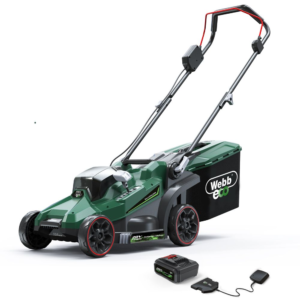

Battery-Powered Lawn Mowers
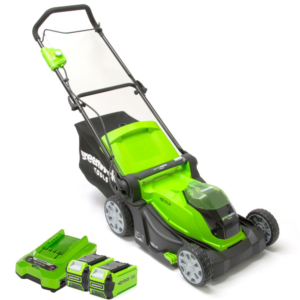

Battery-Powered Lawn Mowers
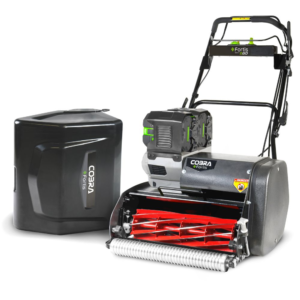

Battery-Powered Lawn Mowers
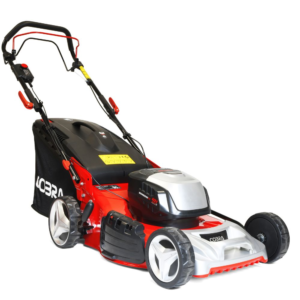

Battery-Powered Lawn Mowers

Battery-Powered Lawn Mowers

Battery-Powered Lawn Mowers

Battery-Powered Lawn Mowers

Battery-Powered Lawn Mowers
Battery-Powered Lawn Mowers

Battery-Powered Lawn Mowers

Battery-Powered Lawn Mowers
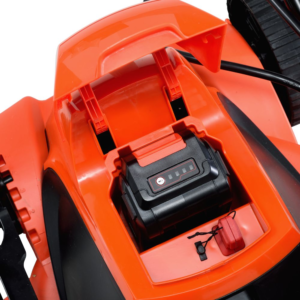
Battery-Powered Lawn Mowers
If you haven’t seriously considered battery-powered lawn mowers yet, 2024 might be the year that changes your mind completely. Cordless electric mowers have crossed a critical threshold in recent years — they’re no longer a compromise option for homeowners who can’t quite justify a gas mower. They’re a genuinely superior choice for a large and growing segment of the lawn care market, delivering cleaner cuts, quieter operation, and dramatically reduced maintenance demands compared to their gas-powered counterparts.
The shift is real and it’s accelerating. Battery technology — particularly lithium-ion chemistry — has matured to the point where a premium cordless mower can handle a half-acre lawn on a single charge, tackle moderately thick and challenging grass without bogging down, and deliver consistent power from the first cut of spring to the last cut of fall. Pair that with push-button starting, zero direct emissions, and near-silent operation, and it becomes genuinely difficult to argue for a gas mower for most suburban homeowners.
This comprehensive guide covers everything you need to know about battery-powered lawn mowers in 2024 — from how the technology works and which brands lead the market, to how to choose the right model for your specific yard and how to get the most out of your investment over the long term. Whether you’re switching from gas for the first time or upgrading from an older cordless model, this is your complete resource.

Why Battery-Powered Lawn Mowers Have Become the Smartest Choice
The case for battery-powered lawn mowers has never been stronger, and it rests on several converging advantages that compound meaningfully over time.
The Technology Has Finally Caught Up
Early battery mowers — the kind that appeared on shelves in the late 2000s and early 2010s — were legitimately underpowered. Modest battery capacities meant short run times, and the motors lacked the torque needed to push through anything but thin, dry, well-maintained grass. It was easy to dismiss them.
That era is over. Today’s best battery-powered lawn mowers use high-voltage lithium-ion battery platforms — 40V, 56V, 60V, and even 80V in some models — that deliver power curves comparable to a 140–160cc gas engine. Arc Lithium cells, brushless motor technology, and intelligent power management systems have fundamentally changed what a cordless mower can do.
The True Cost Comparison Favors Battery
When homeowners compare battery mowers to gas mowers on purchase price alone, gas often looks more affordable at the entry level. But purchase price is only part of the story.
Over the lifetime of a mower, battery-powered lawn mowers eliminate:
- Annual oil changes and engine oil costs
- Spark plug replacements
- Air filter replacements
- Carburetor cleaning and fuel system maintenance
- Fuel costs — gasoline prices fluctuate, but electricity is comparatively stable and cheap
- Winter fuel stabilizer treatments
The cumulative savings over 5–10 years of ownership are substantial. For a homeowner who would spend $80–$120 per year on gas mower maintenance, a battery mower pays back that difference quickly — particularly when you factor in the shared battery platform that powers other cordless tools.
Environmental and Quality-of-Life Benefits Are Real
Battery-powered lawn mowers produce zero direct emissions at the point of use. While it’s true that the electricity used to charge them may come from sources that produce some emissions, a cordless mower still has a dramatically lower overall environmental footprint than a gas engine over its operating lifetime.
The noise reduction benefit is equally real and arguably more immediately felt. A gas push mower typically operates at 85–95 decibels — loud enough to require hearing protection with extended use and easily audible to neighbors two or three houses away. A battery mower operates at 65–75 decibels — roughly comparable to a normal conversation or ambient street noise. You can mow at 7 AM on a Saturday without it being a neighborhood event.
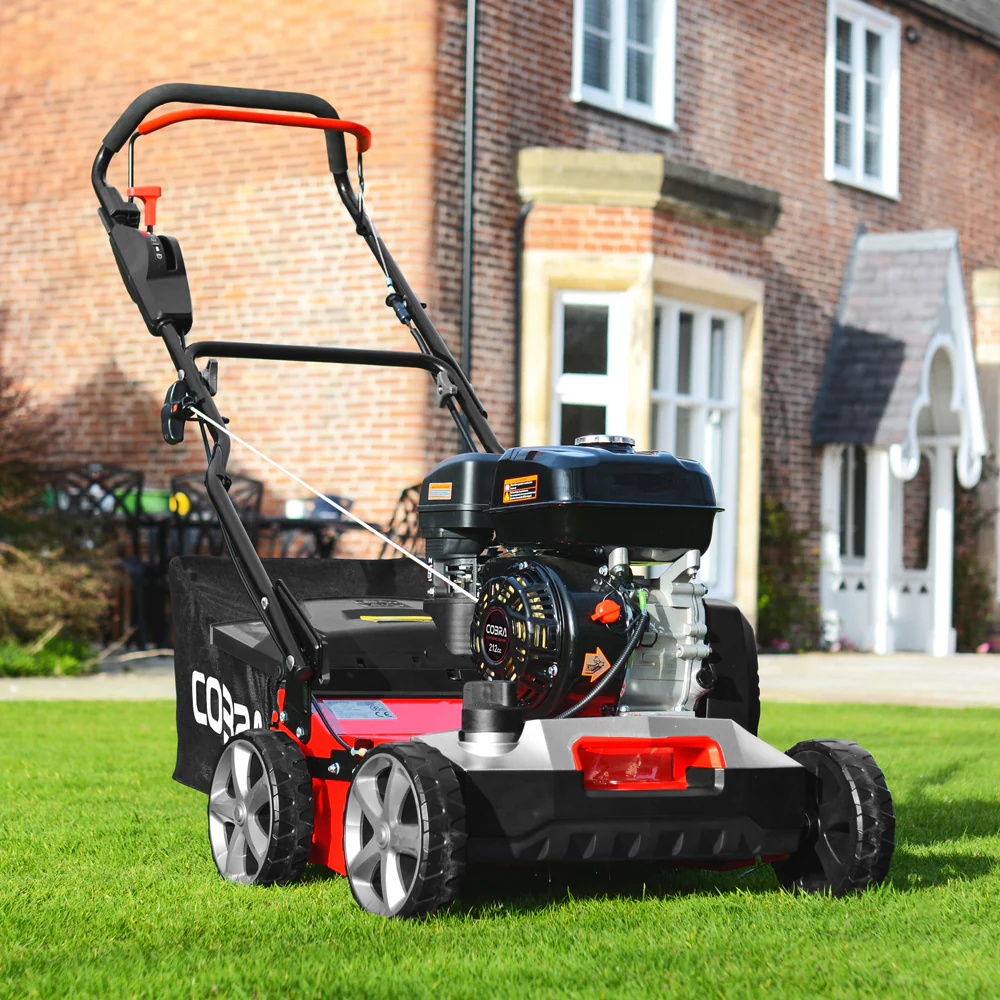
How Battery-Powered Lawn Mowers Work
Understanding the core technology helps you evaluate specifications meaningfully rather than just comparing marketing numbers.
Voltage, Amp-Hours, and What They Actually Mean
Battery mower specifications are dominated by two numbers: voltage (V) and amp-hours (Ah).
Voltage is the best proxy for raw power. Higher voltage platforms generally deliver more torque to the cutting blade, making them more capable in thick or challenging grass. The dominant voltage platforms in today’s market are 40V, 56V, 60V, and 80V. For most homeowners, a 40V or 56V platform provides entirely adequate power. The 80V platforms are best reserved for homeowners with larger, more demanding cutting conditions.
Amp-hours determine how much energy the battery stores and, by extension, how long it can run before needing a recharge. A 56V 5.0 Ah battery stores 280 watt-hours of energy. A 56V 7.5 Ah battery stores 420 watt-hours — 50% more run time under comparable conditions. When comparing battery capacities, multiply voltage by amp-hours to get watt-hours — that’s the most apples-to-apples comparison across different platforms.
As a practical guide:
- A 40V 4.0 Ah battery will typically mow 1/4 acre on a single charge under normal conditions
- A 56V 5.0 Ah battery handles 1/3 to 1/2 acre comfortably
- A 56V 7.5 Ah or 60V 6.0 Ah battery manages a half acre with capacity to spare
Brushless Motors — Why They Matter
Almost every quality battery-powered lawn mower sold today uses a brushless motor, and it’s worth understanding why this matters. Brushless motors are more efficient than brushed motors, generating less heat and friction during operation. This translates directly into longer run time from the same battery, more consistent power delivery as the battery depletes, and a dramatically longer motor service life.
When shopping for battery-powered lawn mowers, treat the presence of a brushless motor as a baseline requirement rather than a premium feature. If a mower’s specifications don’t mention brushless motor technology, that absence is itself informative.
Charging Times and Battery Management
Charging time is increasingly competitive among premium battery mower brands. Standard chargers typically restore a depleted battery in 60–90 minutes. Rapid chargers — often sold as optional accessories or included with premium bundles — can cut that time to 30–40 minutes, which matters if you need to stop mid-mow and complete the job without a long wait.
Modern battery management systems (BMS) in quality cordless mowers also actively protect battery health by preventing overcharging, managing cell temperature, and balancing charge across individual cells within the battery pack. These systems extend battery service life significantly — a well-managed lithium-ion battery in a quality mower should remain at 80% or more of its original capacity after 500+ charge cycles.
Types of Battery-Powered Lawn Mowers
Just as with gas mowers, battery-powered lawn mowers come in several configurations suited to different yard sizes and user preferences.
Battery-Powered Push Mowers — Lightweight and Efficient
The most common configuration in the cordless mower market, battery push mowers are lightweight, maneuverable, and well-suited to small and medium yards. They require you to provide all the forward propulsion, which makes them best for flat terrain and yards under about a third of an acre.
Modern battery push mowers typically weigh 40–65 pounds — noticeably lighter than comparable gas models — making them easier to handle, store, and transport. For physically smaller users or anyone who finds gas mowers unwieldy, the lighter weight of a battery push mower is a genuine quality-of-life improvement.
Battery-Powered Self-Propelled Mowers — The Best of Both Worlds
Self-propelled battery mowers add a drive system that moves the machine forward automatically, requiring you only to guide and steer. This is the sweet spot for most homeowners with yards between a quarter and half an acre, and it becomes close to essential for yards with any meaningful slope.
The self-propel feature in battery mowers is particularly well-executed compared to gas equivalents because brushless drive motors can be precisely speed-controlled — many models offer variable speed settings that let you dial in your exact preferred walking pace. This is more refined than the variable speed systems on most gas self-propelled mowers.
One excellent example is the Yard Force 21″ Self-Propelled RWD Walk Behind Mower with Vertical Storage Technology, available at Sam’s Club. This model features rear-wheel drive self-propulsion for superior hill traction, a 21-inch cutting deck, and an innovative vertical storage design that stores the mower upright to dramatically reduce the garage or shed footprint. It’s a standout pick for homeowners who want the full self-propelled experience with a space-saving storage solution built right in.
Battery-Powered Wide-Area Walk-Behind Mowers
Some cordless mower manufacturers have pushed into wider-deck territory, offering battery-powered models with 22-inch to 30-inch cutting decks. These are designed for homeowners who have larger open lawns but prefer to walk rather than ride, and they reduce mowing time proportionally by cutting more grass with each pass.
Toro’s TimeMaster and select EGO wide-area models fall into this category. They require larger battery capacities to maintain adequate power across wider decks, so expect higher price points and battery requirements compared to standard 21-inch models.
Battery-Powered Robotic Mowers — The Autonomous Option
Robotic lawn mowers sit at the frontier of battery mower technology, operating fully autonomously within a defined perimeter and requiring no physical involvement from the homeowner beyond initial setup. Brands like Husqvarna (Automower), EGO, and Gardena produce robotic mowers that navigate your yard on a schedule, quietly maintaining a consistent grass height without any manual effort.
Robotic mowers are genuinely impressive technology, but they come with significant caveats: high purchase prices, complex installation, and limitations on yard topology and obstacle density. For homeowners with simple, open lawns and the budget to invest, they represent the ultimate in lawn care convenience. Battery-Powered Lawn Mowers
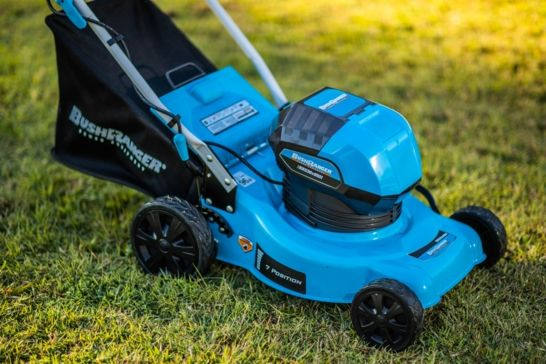
Top Brands in Battery-Powered Lawn Mowers
EGO Power+ — The Undisputed Leader
EGO’s 56V Arc Lithium platform is the gold standard of cordless outdoor power equipment, and their mower lineup reflects that leadership position fully. The EGO LM2135SP with Select Cut multi-blade system is widely recognized as the best battery-powered self-propelled mower currently available to residential buyers. Battery-Powered Lawn Mowers
EGO’s battery ecosystem is another compelling reason to choose this brand. Their 56V platform powers over 70 tools — including string trimmers, leaf blowers, chainsaws, hedge trimmers, pressure washers, and snow blowers. Every EGO battery you purchase becomes an asset that works across your entire outdoor toolkit. Battery-Powered Lawn Mowers
Key EGO strengths:
- Highest-output cordless platform in the residential market
- Weather-resistant construction rated for use in wet conditions
- Industry-leading battery run time and charging speed
- Extensive dealer and service network
Greenworks — Best Value in Battery-Powered Lawn Mowers
Greenworks occupies the value position in the cordless mower market and executes it well. Their 40V and 60V platforms deliver capable performance at price points that undercut EGO by 20–40%, making them the most accessible entry point into serious cordless mowing.
The Greenworks 60V Pro 21-inch self-propelled mower is particularly well-regarded for its performance-to-price ratio, offering rear-wheel drive, variable speed control, and a 5.0 Ah battery at a price that competes with mid-range gas models. Battery-Powered Lawn Mowers
Ryobi — Best Battery-Powered Lawn Mower for Tool Ecosystem Value
Ryobi’s 40V and 18V ONE+ platforms are the most widely used consumer battery ecosystems in the world, and their lawn mower lineup reflects the brand’s core value proposition: broad compatibility across hundreds of tools at accessible prices. If you already own Ryobi 40V tools, adding a Ryobi 40V mower to your kit makes excellent economic sense — your existing batteries are immediately useful Battery-Powered Lawn Mowers.
Ryobi mowers won’t outperform EGO in raw power benchmarks, but for homeowners with modest yards and existing Ryobi tool investments, they represent outstanding overall value Battery-Powered Lawn Mowers.
Husqvarna — Premium Battery-Powered Lawn Mowers for Demanding Yards
Husqvarna’s Aspire and PACE cordless mower lines bring the brand’s professional engineering heritage to the battery-powered segment. Their cordless self-propelled models feature all-wheel drive options, large-capacity battery platforms, and the same heavy-gauge steel decks found on their gas models.
For homeowners with larger or more demanding yards who want the reliability and build quality of a premium brand in a cordless package, Husqvarna is the natural choice. Their BLi battery platform is also cross-compatible with their full range of cordless tools, from trimmers to chainsaws to snow blowers Battery-Powered Lawn Mowers.
Yard Force — Best Battery-Powered Lawn Mower for Space-Saving Storage
Yard Force has carved out a distinctive niche in the battery mower market with innovative design features that address real homeowner pain points. Their vertical storage technology — as featured in the Yard Force 21″ Self-Propelled RWD Walk Behind Mower available at Sam’s Club — allows the mower to be stored standing upright, cutting its garage or shed footprint by more than half compared to conventional horizontal storage Battery-Powered Lawn Mowers.
Beyond the storage innovation, Yard Force mowers offer rear-wheel drive self-propulsion for better hill performance, brushless motor technology for efficiency and longevity, and competitive pricing that makes them an attractive option for buyers who want self-propelled performance without premium brand pricing.
How to Choose the Right Battery-Powered Lawn Mower
With a clear understanding of the technology and the major brands, here’s how to apply that knowledge to find the right mower for your specific situation Battery-Powered Lawn Mowers.
Match Battery Capacity to Your Yard Size
This is the most critical specification decision you’ll make. Buying a mower with insufficient battery capacity for your yard size means stopping mid-mow to wait for a recharge — a frustrating experience that quickly erodes the appeal of cordless mowing.
Use this framework as your starting point Battery-Powered Lawn Mowers:
- Under 1/4 acre: A 40V 4.0 Ah battery is adequate under normal conditions
- 1/4 to 1/3 acre: A 40V 6.0 Ah or 56V 5.0 Ah provides comfortable coverage
- 1/3 to 1/2 acre: A 56V 7.5 Ah or 60V 6.0 Ah is recommended
- 1/2 acre and above: Consider a dual-battery model or plan for one recharge per session
If your yard is at or near the upper limit of any of these ranges, buy up to the next battery tier. Running a battery to full depletion every session accelerates capacity degradation over time, and having a modest buffer capacity extends your battery’s effective service life Battery-Powered Lawn Mowers.
Decide Between Push and Self-Propelled
For flat yards under 1/3 acre, a push configuration is perfectly capable and saves both money and battery drain compared to a self-propelled model. Self-propel systems consume additional power, which reduces effective run time — typically by 10–15% under active use.
For anything larger or hillier, self-propelled is worth the investment. The reduction in physical effort over a long mowing session is significant, and rear-wheel drive models in particular handle inclines with far more confidence than push models on sloped terrain.
Consider Deck Size and Cutting Features
A 21-inch deck is the right choice for the vast majority of homeowners with battery-powered lawn mowers. It provides a good balance of cutting efficiency and maneuverability, and it’s the size around which most battery mower platforms are optimized Battery-Powered Lawn Mowers.
For larger open lawns, a 22-inch or wider deck reduces total mowing time proportionally, but requires a larger battery to maintain consistent power across the wider cutting swath. Make sure the battery capacity recommendations above are applied to wider-deck models conservatively Battery-Powered Lawn Mowers.
Look for 3-in-1 discharge capability — bagging, mulching, and side discharge — as a baseline feature. Single-function models limit your flexibility depending on grass conditions Battery-Powered Lawn Mowers.
Evaluate the Battery-Powered Lawn Mowers Platform, Not Just the Mower
When you buy a battery-powered lawn mower, you’re not just buying a mower — you’re buying into a battery platform. Before committing to a brand, consider the full ecosystem of tools available on that platform. A 56V EGO battery that powers your mower, trimmer, blower, and edger is worth considerably more than a proprietary battery that only works with one or two tools.
The brands with the deepest, most valuable ecosystems are EGO (56V), Greenworks (60V Pro), Ryobi (40V), and Husqvarna (BLi). All four offer extensive product ranges where a single battery platform spans dozens of tools.
Getting the Most From Your Battery-Powered Lawn Mower
Owning a battery mower is low-maintenance by definition, but a few smart habits will maximize its performance and extend its useful life significantly.
Mowing Technique for Battery-Powered Lawn Mowers Efficiency
Mow at the right frequency. The “one-third rule” — never removing more than one-third of the grass blade in a single mowing session — applies doubly to battery mowers. Tall, thick grass requires far more motor power to cut, draining your battery faster and producing a lower-quality result. Mow every 5–7 days during peak growing season to keep your grass in the ideal cutting range.
Overlap passes slightly. A 2–3 inch overlap between passes ensures no strips of grass are missed, even when battery power causes subtle speed variations near the end of a charge.
Mow in straight, parallel lines where possible. Constant turning and maneuvering is inefficient for battery consumption. Straight passes with deliberate turning at row ends optimize your run time.
Battery Storage Best Practices
Never store a lithium-ion battery fully depleted. A completely drained battery left in storage for extended periods can enter a deep discharge state from which it cannot recover. Store your battery at 50–80% charge during the off-season.
Temperature matters enormously. Lithium-ion cells degrade faster at temperature extremes. Store your mower and batteries in a climate-controlled environment — a garage that freezes in winter or bakes in summer is not ideal. A temperature range of 50–77°F (10–25°C) is optimal for long-term battery health.
Remove the battery from the mower during storage. This prevents any parasitic drain from the mower’s electronics and makes it easier to store the battery under optimal conditions independently.
Blade Maintenance — Critical for Battery Efficiency
A sharp cutting blade is even more important for battery mowers than for gas mowers, because every bit of cutting resistance translates directly into battery drain. A sharp blade glides through grass cleanly. A dull blade tears and batters, requiring significantly more motor torque and consuming proportionally more battery power.
Sharpen your battery mower blade at least once per season, or more frequently if your yard contains sandy soil, frequent debris, or coarse grass varieties. Most blade sharpening services cost under $15 at local hardware stores or small engine shops, and DIY sharpening with a file takes less than 10 minutes once you’ve done it a few times.
Deck Cleaning for Consistent Performance
Grass clippings that accumulate on the underside of your mower deck reduce airflow within the cutting chamber, which degrades mulching quality and can cause clippings to clump and drop in uneven piles on your lawn. Clean the underside of the deck after every 3–5 mowing sessions using a garden hose or specialized deck wash-out port if your mower has one.
Many battery mowers include a wash-out port — a hose connector on the deck top that lets you flush the underside with water while the blade spins slowly. This feature is worth specifically looking for when shopping, as it makes routine deck cleaning dramatically faster and easier.
Battery-Powered Lawn Mowers vs. Gas: The Definitive Comparison
For homeowners still on the fence, here’s a clear side-by-side assessment of the two technologies across the dimensions that matter most.
Starting and Convenience: Battery wins decisively. Push-button starting versus a pull cord that may require multiple attempts, especially after winter storage, is not a close comparison.
Cutting Power: Gas wins for maximum heavy-duty performance. Battery wins for typical residential conditions. For 80–90% of suburban homeowners, battery power is entirely adequate.
Run Time: Gas wins for unlimited runtime. Battery is sufficient for most yards but requires charging for larger properties.
Noise: Battery wins significantly. 65–75 dB vs. 85–95 dB is a meaningful quality-of-life difference for you, your household, and your neighbors.
Maintenance: Battery wins decisively. No oil, no spark plugs, no air filters, no carburetor, no fuel system.
Environmental Impact: Battery wins on direct emissions and noise pollution. The full lifecycle comparison depends on your local electricity grid.
Upfront Cost: Gas wins at entry-level price points. Battery wins at mid-to-premium tiers when battery platform value is factored in.
Total Cost of Ownership: Battery wins over a 5–10 year period when maintenance savings and fuel cost elimination are applied.
Frequently Asked Questions About Battery-Powered Lawn Mowers
How long do battery-powered lawn mower batteries last? With proper care and storage, a quality lithium-ion mower battery should maintain 80% or more of its original capacity after 500 charge cycles. For homeowners who mow weekly during a 30-week season, that represents roughly 16 years of use — although real-world degradation rates vary based on storage conditions and usage patterns.
Can battery-powered lawn mowers handle wet grass? Most quality battery mowers can cut damp grass without damage, but it’s not recommended as routine practice. Wet grass clumps in the cutting chamber, strains the motor, produces uneven cuts, and can spread lawn diseases. Wait until surface moisture has dried before mowing when possible Battery-Powered Lawn Mowers.
Are battery-powered lawn mowers safe to use in the rain? Most premium battery mowers are built with weather-resistant construction and can tolerate light moisture, but mowing in active rain is not advisable — both for safety reasons and to protect the battery and electrical components from water ingress. Check your specific model’s IP rating or weather resistance specifications before operating in wet conditions.
What happens when the battery dies mid-mow? The mower simply stops. Most battery mowers provide LED indicators showing remaining charge, and many give audible or visual low-battery warnings before power cuts out. Owning a second battery of the same platform lets you swap and continue immediately — a worthwhile investment for larger yards.
Are battery-powered lawn mowers powerful enough for tall grass? Premium battery mowers on high-voltage platforms (56V and above) can handle moderately tall grass effectively, though they may require a slower walking pace to maintain clean cutting quality. For severely overgrown grass — anything over 6 inches — it’s worth doing an initial rough pass on the mower’s highest height setting before dropping to your target cutting height.
Final Thoughts: Why Battery-Powered Lawn Mowers Are the Future — and the Present
Battery-powered lawn mowers aren’t the future of residential lawn care anymore — they’re the present. For the majority of homeowners mowing yards between 1,500 square feet and half an acre, a quality cordless mower from EGO, Greenworks, Husqvarna, or Yard Force delivers everything they need and eliminates most of what they don’t want: the noise, the fumes, the maintenance, and the pull-cord frustration.
The technology is mature. The value proposition is proven. The ecosystem benefits are real. And the environmental advantages, while secondary to most buyers’ decision-making, are a genuine positive outcome of making the switch.
If you’re ready to explore your options, the Yard Force 21″ Self-Propelled RWD Walk Behind Mower with Vertical Storage Technology at Sam’s Club is a standout choice for homeowners who want self-propelled performance, hill-ready rear-wheel drive, and an innovative vertical storage design that solves one of the most common complaints about push mower ownership — where to put the thing when you’re not using it.
For more curated comparisons, expert recommendations, and a full range of battery-powered lawn mower options across every budget and yard size, visit our lawn mower shop at MowMasterPro and find the perfect cordless mower for your lawn today.
A quieter, cleaner, and smarter approach to lawn care is one purchase away.