
Uncategorized
Walk Behind Mowers: The Best Large Lawn Mower Options for a Perfectly P0werful Cut

Mar
When it comes to maintaining a large, healthy, and beautiful lawn, few decisions matter more than choosing the right equipment. Walk behind mowers have long been the backbone of residential and light commercial lawn care, offering a powerful, hands-on mowing experience that riding mowers simply cannot replicate in every situation. Whether you’re navigating a sprawling backyard, managing a steep slope, or working around complex landscaping features, the right large lawn mower in the walk-behind category can transform a grueling chore into a satisfying, efficient routine.
The walk behind mower market in 2024 is more exciting and competitive than it has ever been. Advances in battery technology, self-propel systems, deck engineering, and ergonomic design have produced a new generation of machines that outperform their predecessors in almost every measurable way. Gas models are cleaner and more fuel-efficient. Battery models now deliver runtime and torque that rival gas. And self-propelled drive systems have become so refined that even the most physically demanding yards are manageable for a broader range of homeowners.
This comprehensive guide covers everything you need to know about walk behind mowers — from the major categories and top brands to expert buying advice and detailed maintenance guidance. By the end, you’ll have a clear, confident picture of which walk behind mower and large lawn mower configuration is the right fit for your specific yard, lifestyle, and budget.
Why Walk Behind Mowers Remain the Gold Standard for Large Lawn Care
In an era of robotic mowers and increasingly capable riding tractors, walk behind mowers continue to dominate the residential lawn care market — and for good reason. Their combination of maneuverability, cutting precision, affordability, and accessibility makes them the most practical choice for the vast majority of homeowners.
Here’s why walk behind mowers continue to hold their ground:
Maneuverability that riding mowers can’t match. A walk behind mower can navigate tight turns, narrow passages between garden beds, slopes too steep for a rider, and heavily landscaped yards with ease. For any yard that isn’t a wide-open, flat rectangle, walk behind mowers simply go places riding mowers cannot.
Cutting quality that rivals professional equipment. Self-propelled walk behind models with wide decks and sharp blades produce a cut quality that many homeowners prefer over riding mowers — particularly in terms of how cleanly the blade interacts with individual grass blades at varying heights.
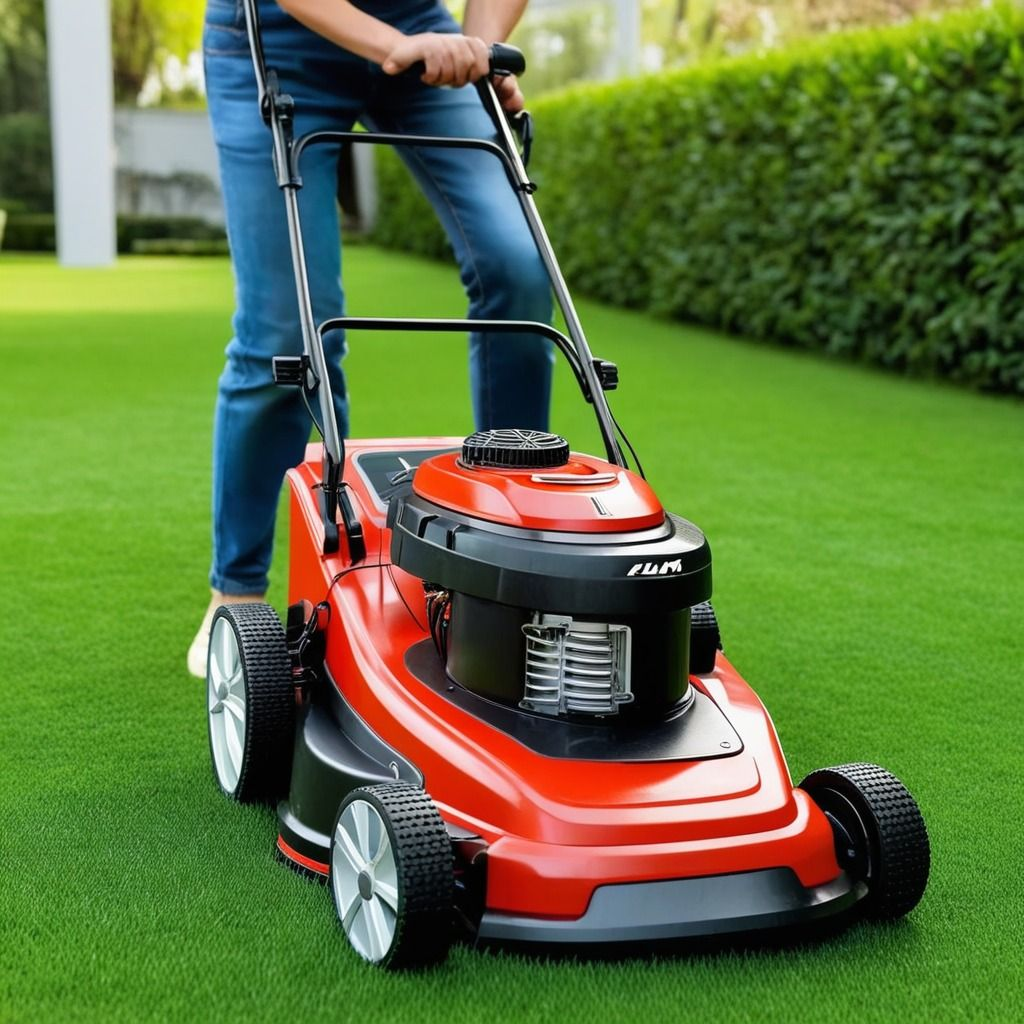
Lower cost of ownership across every tier. From entry-level push models to premium self-propelled large lawn mowers, walk behind options cost significantly less to purchase, insure, maintain, and store than comparable riding equipment. For yards under an acre, the math strongly favors the walk-behind approach.
Physical health benefits. Mowing with a quality self-propelled walk behind mower provides meaningful low-impact cardiovascular exercise. For many homeowners, this is genuinely valued — mowing becomes a productive outdoor activity rather than a purely mechanical chore.
Storage simplicity. Even the largest walk behind mowers fold down to a fraction of the footprint required by a riding tractor. For homeowners with limited garage or shed space, this is a decisive practical advantage.
Types of Walk Behind Mowers: Finding Your Perfect Large Lawn Mower Match
Understanding the major walk behind mower categories is the essential first step toward making a smart buying decision. Each type has distinct strengths, and the right choice depends heavily on your yard’s specific characteristics.
Self-Propelled Walk Behind Mowers — The Best Large Lawn Mower for Most Homeowners
Self-propelled walk behind mowers use a mechanical drive system to move the machine forward, allowing you to guide and steer rather than physically push. For large lawns, this distinction is critical — the difference in physical effort over the course of a 45-minute to 90-minute mowing session is enormous.
Self-propelled models are available in three drive configurations, each with meaningful differences in real-world performance:
Front-wheel drive (FWD) engages the front wheels to pull the mower forward. FWD models perform best on flat, open terrain where consistent traction is easy to maintain. They’re typically the most affordable self-propelled option and work well for straightforward, level lawns.
Rear-wheel drive (RWD) powers the rear wheels, which remain in contact with the ground more consistently — especially when the front of the mower tips upward on uneven terrain or slopes. RWD models provide noticeably better traction on hills and are widely considered the best configuration for large lawns with varied terrain. The Yard Force 21″ Self-Propelled RWD Walk Behind Mower with Vertical Storage Technology is an excellent example of how RWD technology paired with innovative storage design delivers exceptional value — it combines powerful rear-wheel drive performance with a vertical storage system that dramatically reduces the garage footprint compared to conventional mowers.
All-wheel drive (AWD) provides powered traction to all four wheels simultaneously, delivering maximum grip in the most demanding conditions — steep slopes, wet grass, soft or loose soil, and heavily uneven terrain. AWD models sit at the premium end of the walk behind market and are worth every cent for homeowners whose yards genuinely require that level of traction control.
Push Walk Behind Mowers — The Straightforward Large Lawn Mower Option
Push mowers require you to provide all the forward momentum yourself. On flat, small yards, this is entirely manageable. On large lawns, however, a push-only walk behind mower becomes physically demanding — particularly in summer heat or on sloped terrain.
That said, push walk behind mowers offer real advantages in certain situations:
- Lower purchase price, making them the most accessible entry point
- Lighter weight — easier to lift, transport, and maneuver around tight obstacles
- Simpler mechanical systems with fewer components to maintain or repair
- Perfectly adequate for flat yards under a third of an acre
For large lawns specifically, a self-propelled model is almost always worth the premium. But for homeowners with smaller, flatter yards who want a capable walk behind mower at the best possible price, push models remain a strong and sensible choice.
Wide-Deck Walk Behind Mowers — The Dedicated Large Lawn Mower Solution
Standard walk behind mowers feature cutting decks between 19 and 22 inches. Wide-deck models push that number to 26, 28, or even 30 inches, dramatically reducing the number of passes required to cover a large lawn.
Brands like Toro offer their TimeMaster series with 30-inch cutting decks — a machine that covers roughly 43% more ground per pass than a standard 21-inch mower. For homeowners with large, open lawns who want the speed advantage of a wider deck without transitioning to a riding mower, wide-deck walk behind models are a compelling and often overlooked solution.
Commercial-Grade Walk Behind Mowers — When Only the Best Large Lawn Mower Will Do
Commercial walk behind mowers are built to withstand the demands of professional landscaping crews mowing multiple properties daily. They feature heavy-duty steel fabricated decks, commercial-grade engines, and drive systems engineered for thousands of hours of continuous use.
For most residential homeowners, commercial-grade walk behind mowers represent overkill — both in terms of performance and price. However, for homeowners with very large, complex properties, or those who simply want equipment that will outlast everything else on the market, investing in a commercial-grade walk behind machine is a legitimate option worth considering.
Top Brands Producing the Best Walk Behind Mowers and Large Lawn Mowers
Yard Force — Innovation Meets Everyday Performance
Yard Force has emerged as a brand that consistently delivers genuinely innovative features at accessible price points. Their walk behind mowers are engineered with real-world usability in mind, and their Vertical Storage Technology is one of the most practically useful innovations to hit the consumer walk behind mower market in years.
The Yard Force 21″ Self-Propelled RWD Walk Behind Mower exemplifies this philosophy perfectly. This machine stores vertically against a wall, reclaiming up to 70% of the floor space that a conventionally stored mower would require. For homeowners with tight garage or shed space — which is to say, most homeowners — this is a game-changing practical advantage that justifies choosing Yard Force over comparably priced competitors.
Beyond storage innovation, Yard Force’s RWD self-propelled system delivers confident traction on hills and uneven terrain, and the 21-inch cutting deck handles typical suburban lawns with ease. If you’re shopping for a capable, feature-rich self-propelled walk behind mower that solves the storage problem most homeowners face, the Yard Force RWD model deserves serious consideration.
Honda — The Benchmark for Walk Behind Mower Reliability
Honda’s small engine reputation is unmatched in the lawn care industry, and their walk behind mower lineup backs that reputation with consistent, measurable performance. Honda’s HRX and HRN series self-propelled walk behind mowers combine their GCV engine platform with their proprietary MicroCut twin-blade system — a design that produces finer mulch and a cleaner cut than conventional single-blade configurations.
Honda walk behind mowers are built for longevity. Their NeXite composite decks resist denting, rusting, and cracking far better than conventional steel. Their engines, maintained properly, routinely serve 15–20 years without major repairs. If total cost of ownership over a long service life is your primary metric, Honda is the brand that earns its premium price most consistently.
Husqvarna — High-Performance Walk Behind Mowers for Demanding Lawns
Husqvarna brings a level of engineering intensity to residential walk behind mowers that reflects their professional equipment heritage. Their self-propelled gas models — particularly the HU800AWDH — feature all-wheel drive, heavy-duty steel decks, and powerful engines that handle challenging terrain conditions with authority.
For homeowners with large, sloped, or otherwise demanding lawns who want a walk behind mower that performs closer to commercial equipment, Husqvarna consistently delivers. Their mowers are heavier and more robustly built than most residential alternatives, which translates directly to better performance in tough conditions and a longer overall service life.
Toro — Walk Behind Innovation for Large Lawn Efficiency
Toro has been engineering walk behind mowers for over a century, and their commitment to continuous product innovation shows clearly in their current lineup. The Toro Recycler series features their Personal Pace self-propel system — which automatically adjusts the mower’s forward speed to match your natural walking pace — and their Super Recycler models include a cast aluminum deck for exceptional durability.
For large lawn applications, Toro’s TimeMaster 30-inch walk behind mower is a category of its own. Its wide deck dramatically reduces mowing time for open, larger lawns without requiring the investment or storage demands of a riding tractor. If you have a large lawn and want the fastest possible walk-behind mowing solution, the TimeMaster is the machine to consider.
EGO Power+ — The Best Battery-Powered Walk Behind Mower Brand
EGO’s 56V Arc Lithium platform has redefined what battery-powered walk behind mowers can accomplish. Their Select Cut series mowers use a multi-blade cutting system that produces commercial-quality results from a completely cordless machine — no emissions, no noise, no pull-cord frustration.
For homeowners who want a large lawn mower solution that is powerful enough for serious work but quiet and clean enough to use at any hour, EGO’s walk behind lineup is the answer. Their largest battery configurations — paired with their 21-inch or 22-inch self-propelled models — deliver runtime sufficient for most residential large lawn applications on a single charge.
CRAFTSMAN — Reliable Walk Behind Performance at Fair Prices
CRAFTSMAN has been a trusted name in American lawn and garden equipment for generations, and their walk behind mower lineup continues to deliver solid performance at competitive prices. Their M220 and M230 self-propelled series offer 3-in-1 cutting flexibility, reliable Briggs & Stratton engines, and user-friendly features that make them a consistently popular choice for homeowners who want dependable, no-nonsense performance.
CRAFTSMAN walk behind mowers are widely available through major retailers, making parts, service, and accessories easy to source throughout their long service lives.
How to Choose the Right Walk Behind Mower for a Large Lawn
With the category and brand landscape mapped out, the next step is developing a clear evaluation framework for your specific situation. Here are the key decision factors for anyone shopping for a walk behind large lawn mower.
Yard Size and Configuration
Lawn size is the single most important variable in walk behind mower selection, and it directly influences which features matter most.
1/4 to 1/2 acre: A standard 21-inch self-propelled walk behind mower — gas or battery — is perfectly suited to this range. Self-propel is worth prioritizing for the upper end of this range, especially on anything other than perfectly flat terrain.
1/2 to 3/4 acre: A self-propelled walk behind mower with a larger engine or battery, combined with a 22-inch deck, handles this range efficiently. For open layouts with minimal obstacles, a wide-deck model (26–30 inches) becomes worth considering as a time-saving upgrade.
3/4 acre to 1 acre: At this size, the case for a wide-deck walk behind or a powerful self-propelled large lawn mower with a premium drive system is strong. RWD or AWD configurations become important, and engine output or battery capacity should be at the high end of what each brand offers in their walk-behind lineup.
Over 1 acre: Walk behind mowers can still be used effectively at this scale, but the time investment becomes significant. A wide-deck self-propelled model — like Toro’s TimeMaster — is worth serious consideration. Alternatively, this may be the threshold where a combination approach (walk-behind for detailed work, riding mower for open areas) makes the most practical sense.
Terrain and Slope Assessment
Flat terrain is forgiving — almost any well-made walk behind mower will handle it comfortably. But as soon as significant slopes enter the picture, your mower selection becomes much more consequential.
For slopes under 10 degrees, a standard self-propelled RWD walk behind mower handles the terrain well. For slopes between 10 and 20 degrees, an AWD model provides meaningfully better traction and control. For slopes exceeding 20 degrees, safety becomes the primary consideration — consult the manufacturer’s specifications and consider whether a different equipment type is more appropriate.
Wet grass amplifies every slope challenge. A mower that handles a moderate slope easily in dry conditions may struggle significantly when the grass is wet and slippery. This is another reason RWD and AWD configurations earn their price premium on anything other than perfectly flat terrain.
Drive System Selection
As covered in the mower types section, your choice between FWD, RWD, and AWD should be driven primarily by your terrain:
- Flat, open lawns: FWD or RWD — both work well, FWD is slightly more affordable
- Mixed terrain with gentle slopes: RWD — better traction and stability on inclines
- Challenging slopes or highly uneven ground: AWD — maximum traction in all conditions
- Very large, open lawns: Consider wide-deck models in any drive configuration
Cutting Deck Width vs. Maneuverability Trade-Off
Wider decks mean faster mowing — but they also mean a heavier mower, reduced maneuverability in tight spaces, and more challenging storage. Finding the right balance for your specific yard layout is important.
If your large lawn is relatively open with minimal landscaping obstacles, a 22-inch or wider deck is a straightforward efficiency win. If your large lawn has numerous trees, garden beds, fence lines, or other obstacles requiring frequent turns and repositioning, a 21-inch deck may actually deliver a better overall mowing experience despite the slower pace.
Power Source Decision: Gas vs. Battery for Large Lawns
For large lawns specifically, the gas vs. battery decision carries more weight than it does for smaller yards where run time is rarely a concern.
Gas remains the reliable choice for very large lawns (3/4 acre and above) where a single battery charge may not cover the entire property. Gas mowers offer unlimited run time with a simple refuel stop, and their raw torque output handles tall or thick grass without hesitation.
Battery has closed the gap significantly for lawns in the 1/2 to 3/4 acre range. Premium battery walk behind mowers from EGO — particularly when paired with their largest capacity batteries — can handle this range comfortably. And the convenience, quiet operation, and reduced maintenance of battery-powered large lawn mowers is a genuine quality-of-life improvement for the right user.
The smart battery strategy for large lawns: Purchase an additional battery for your cordless walk behind mower. With two fully charged batteries ready before each mowing session, most battery walk behind mowers can handle lawns up to a full acre without interruption.
Walk Behind Mower Features That Matter Most for Large Lawns
Beyond the fundamental decisions around type, brand, and power source, several specific features have an outsized impact on the large lawn mowing experience.
Variable Speed Self-Propel Control
The ability to adjust forward speed on a self-propelled walk behind mower is more valuable than it might initially seem. When mowing open straightaways, a faster pace saves time. When navigating around obstacles, turning in tight spaces, or working on slopes, slower and more deliberate movement produces better results and is safer.
Look for self-propelled walk behind mowers that offer a continuous variable speed range — not just preset speed settings. The most refined systems, like Toro’s Personal Pace, automatically match your walking speed without requiring manual adjustment at all.
Blade Engagement and Override Systems
On any quality walk behind mower, the blade engagement system — also called the blade control bail or operator presence control — should stop the blade quickly and reliably when released. This is a critical safety feature.
Premium models offer blade override capability, which allows you to stop the cutting blade without killing the engine. This is enormously convenient during longer mowing sessions when you need to briefly stop cutting — to clear a clog, reposition, or avoid an obstacle — without going through the full restart process.
Cutting Height Adjustment Range and Convenience
For large lawns specifically, having a wide cutting height range and a convenient adjustment mechanism matters more than on small yards. You’re covering more ground, encountering more grass variety, and potentially adjusting height settings multiple times in a single session.
Single-lever height adjustment — one lever that simultaneously adjusts all four wheels — is the gold standard for convenience. Look for a range that spans at least 1 inch to 4 inches, with fine adjustment increments that allow precise height matching to your specific grass variety’s needs.
Mulching Quality and Clipping Management
For large lawns, what you do with grass clippings has real practical consequences. Bagging clippings on a large lawn means frequent stops to empty a full bag — on a 3/4-acre lawn, you might empty a standard grass catcher 8 to 12 times per mowing session.
Mulching is the preferred approach for large lawn management. A high-quality mulching system finely chops clippings into tiny particles that fall back into the turf, decompose quickly, and return nitrogen and organic matter to the soil. This effectively provides a free, natural fertilizer application with every mowing session.
For walk behind mowers used on large lawns, prioritize models with genuinely capable mulching systems — look for aerodynamic deck designs and blade configurations specifically engineered for fine mulching rather than basic side discharge with a mulch plug option.
Vertical and Compact Storage Solutions
Large lawn mowers are, by definition, larger pieces of equipment — and storing them efficiently is a genuine challenge for many homeowners. This is where innovations like Yard Force’s Vertical Storage Technology provide real, tangible everyday value.
The ability to store a walk behind mower vertically against a wall — rather than requiring a flat footprint of 5 to 6 square feet on the garage floor — can be the deciding factor for homeowners whose storage space is already at a premium. Before finalizing any walk behind mower purchase, consider not just where the mower will be used, but where it will spend the other 99% of its time sitting in storage.
Maintaining Your Walk Behind Large Lawn Mower for Maximum Longevity
A quality walk behind large lawn mower is a significant investment, and proper maintenance is what transforms that investment into a decade-long relationship rather than a recurring purchase cycle.
Essential Gas Walk Behind Mower Maintenance
Beginning of each mowing season:
- Perform a complete oil change using the manufacturer’s specified oil grade and viscosity
- Install a fresh spark plug — a $5 part that prevents countless frustrating no-start situations
- Inspect and clean or replace the air filter — a clogged filter starves the engine of air and dramatically reduces performance
- Sharpen or replace the cutting blade — the single most impactful maintenance task for cut quality
- Check the drive belt and cables on self-propelled models for wear or stretching
- Inspect and inflate tires to the recommended pressure
Mid-season checks:
- Inspect blade for nicks, bends, or significant wear — sharpen or replace as needed
- Check oil level before every 5 to 10 hours of use
- Clear any grass buildup from the underside of the deck to prevent corrosion and maintain airflow
End of season preparation:
- Run the fuel tank completely dry, or add a quality fuel stabilizer to prevent carburetor gumming during storage
- Perform a final oil change on high-use mowers
- Clean the entire mower thoroughly, paying special attention to the underside of the deck
- Lubricate all moving parts — wheel axles, drive cables, pivot points — with appropriate lubricant
- Store in a dry, sheltered location away from temperature extremes and moisture
Battery Walk Behind Mower Maintenance
Battery mowers are dramatically simpler to maintain, but a few practices meaningfully extend their service life:
- Blade care: Sharpen or replace at least once per season — the same blade health principles apply regardless of power source
- Battery storage protocol: Never store lithium-ion batteries in a fully depleted state. Charge to approximately 50–80% for long-term storage. Never leave batteries in a vehicle or outdoor location exposed to temperature extremes
- Deck cleaning: Rinse the underside of the deck after every three to five mowing sessions to prevent grass buildup that can cause corrosion and airflow restriction
- Terminal maintenance: Periodically inspect battery and tool terminals for debris or corrosion and clean with a dry cloth as needed

The Blade Sharpening Priority
Regardless of whether your walk behind large lawn mower runs on gas or battery, blade sharpness is the highest-leverage maintenance action available to you. A properly sharp blade delivers a clean, precise cut that seals the grass blade, reduces moisture loss, and keeps your lawn looking green and healthy between mowing sessions.
A dull blade, by contrast, tears and shreds grass rather than cutting it cleanly. The resulting ragged tips turn white and then brown within 24 to 48 hours, giving your lawn a stressed, unhealthy appearance regardless of how carefully you mow.
Sharpen your walk behind mower blade a minimum of once per season, and consider twice-per-season sharpening if you maintain a large lawn, mow at a fast pace, or operate in areas with sandy, abrasive soil that dulls blades more quickly.
Frequently Asked Questions About Walk Behind Mowers and Large Lawn Mowers
What size walk behind mower do I need for a large lawn? For lawns between 1/2 and 3/4 of an acre, a self-propelled walk behind mower with a 21 to 22-inch deck is appropriate and efficient. For lawns approaching or exceeding one acre, a wide-deck model with a 26 to 30-inch cutting width — or a combination of walk-behind and riding equipment — will save meaningful time per mowing session.
Is a self-propelled walk behind mower worth the extra cost for large lawns? For lawns over 1/3 of an acre, self-propelled is unambiguously worth the price premium. The reduction in physical effort over a 60 to 90-minute mowing session is significant, and self-propel systems pay for themselves in comfort and efficiency within a single season of regular use.
How long does it take to mow a large lawn with a walk behind mower? A standard 21-inch self-propelled walk behind mower covers approximately 20,000 square feet (roughly half an acre) in 45 to 60 minutes at a comfortable mowing pace. A wide-deck 30-inch model covers the same area in approximately 30 to 40 minutes. Individual mowing times vary based on terrain complexity, obstacles, and the operator’s pace.
Can a battery-powered walk behind mower handle a large lawn? Yes — with the right battery configuration. A premium 56V walk behind mower from EGO paired with their largest capacity battery (10 Ah or above) can handle lawns up to approximately 3/4 of an acre on a single charge. Purchasing a second battery effectively doubles that capacity, making battery-powered walk behind mowers a practical choice for most large lawn applications.
What is the benefit of rear-wheel drive on a walk behind mower? Rear-wheel drive maintains better traction on slopes and uneven terrain because the rear wheels — which bear more of the mower’s weight — remain in consistent contact with the ground even when the front tips upward. For any yard with hills, RWD delivers noticeably more confident and controlled performance than front-wheel drive, making it the preferred configuration for large lawn mowers used on varied terrain.
How do I store a large walk behind mower in a small garage? Vertical storage technology, like that featured in the Yard Force 21″ Self-Propelled RWD model, allows some walk behind mowers to be stored upright against a wall, reclaiming significant floor space. Alternatively, most walk behind mowers can be stored with their handles folded flat, which reduces their footprint considerably. Ceiling-mounted garage storage hooks and pulley systems are another popular solution for maximizing storage space.
Final Thoughts: Finding the Best Walk Behind Mower for Your Large Lawn
Walk behind mowers remain the most versatile, cost-effective, and practically useful lawn care tool available to homeowners managing lawns of up to an acre — and with the right machine, even larger properties are entirely manageable.
The best walk behind mower for your large lawn is the one that genuinely fits your yard’s size, terrain, and your personal preferences around power source, maintenance, and storage. For most homeowners managing large lawns in 2024, a self-propelled RWD gas or premium battery walk behind mower with a 21 to 22-inch deck represents the ideal combination of performance, efficiency, and value.
If storage space is a concern — and for most homeowners, it is — models like the Yard Force 21″ Self-Propelled RWD Walk Behind Mower with Vertical Storage Technology solve a real, practical problem that most mower brands simply haven’t addressed. The combination of capable RWD performance and genuinely space-saving vertical storage makes it one of the most thoughtfully designed walk behind mowers on the market today.
For more curated walk behind mower recommendations, side-by-side comparisons, and expert buying guidance tailored to every lawn size and budget, visit our lawn mower shop. We’ve done the research so you don’t have to — find the perfect large lawn mower for your yard and start enjoying a better-looking lawn this season.
