
When most homeowners think about serious trimming and brush-cutting power, the Stihl lawn trimmer is often the first name that comes to mind. Stihl has spent decades building an almost mythological reputation in the outdoor power equipment world — and for good reason. Their gas-powered trimmers and brush cutters are genuinely excellent machines, trusted by landscaping professionals and dedicated homeowners alike.
But here’s the thing: the electric brush cutter market has quietly undergone a revolution. Battery technology, motor engineering, and build quality have all advanced to a point where the best electric brush cutters can legitimately challenge — and in some scenarios outperform — even a well-regarded Stihl lawn trimmer at a fraction of the long-term running cost.
This guide gives you the complete, honest picture. We’ll break down what makes the Stihl lawn trimmer so respected, explore the top electric brush cutter alternatives that are reshaping the market, and give you a clear framework for deciding which tool — or combination of tools — is truly right for your property and workflow.
By the end of this guide, you’ll have everything you need to make a confident, well-informed decision about your next trimmer or brush cutter purchase.
Why the Stihl Lawn Trimmer Has Dominated for Decades
Before we dive into the electric alternatives, it’s worth understanding exactly why the Stihl lawn trimmer has earned its near-universal respect among lawn care professionals and serious homeowners.
Stihl was founded in Germany in 1926, and the company has maintained a singular focus: building the most reliable, most powerful handheld outdoor power tools available. They don’t manufacture cheap entry-level tools designed for occasional use. Every Stihl lawn trimmer is engineered with professional-grade durability in mind, even in models aimed at residential buyers.
What Makes the Stihl Lawn Trimmer Stand Apart
The Stihl lawn trimmer lineup includes both string trimmers and dedicated brush cutters, with engine displacements ranging from light-duty models like the FS 38 all the way to heavy commercial machines like the FS 460 C-EM — a beast capable of clearing dense scrub, thick woody stems, and invasive brush that would destroy lesser machines.
Several characteristics consistently distinguish Stihl products from competitors:
Engine quality: Stihl manufactures many of their own engines rather than sourcing from third-party suppliers. This vertical integration gives them precise control over power output, fuel efficiency, and long-term reliability. A Stihl lawn trimmer engine, properly maintained, routinely runs for 10 or more years.
Anti-vibration systems: Professional trimmer use over extended periods creates cumulative hand-arm vibration that can cause real physical harm over time. Stihl’s multi-point anti-vibration mounts reduce transmitted vibration dramatically compared to budget competitors, making their tools safer and more comfortable for extended use.
Ergonomic design: Stihl invests heavily in balance and handling. Their trimmers are designed so that the weight distribution feels natural during use, reducing fatigue on long jobs. The difference between a Stihl and a poorly balanced budget trimmer becomes very apparent after 30 minutes of continuous use.
Dealer network support: Unlike most brands sold exclusively through big-box retailers, Stihl products are sold and serviced through a network of dedicated dealers. This means you have access to knowledgeable service technicians, genuine replacement parts, and expert advice — not just a customer service phone number.
Where the Stihl Lawn Trimmer Falls Short
Despite all of its genuine strengths, the Stihl lawn trimmer does have real limitations that are worth acknowledging honestly.
Cost: Quality comes at a price. Entry-level Stihl residential trimmers start around $200 and climb quickly. Professional-grade brush cutters can exceed $600 or even $800. For homeowners who trim occasionally, that’s a significant investment in a tool that may be overkill.
Dealer-only availability: Because Stihl sells exclusively through authorized dealers, you can’t simply order online or pick one up at a warehouse club. You need to find your nearest dealer, which can be inconvenient depending on where you live.
Maintenance requirements: Like all gas-powered tools, the Stihl lawn trimmer requires regular maintenance — fuel mixing (for 2-stroke models), carburetor cleaning, spark plug replacement, air filter service, and careful fuel storage between seasons. For homeowners who simply want a grab-it-and-go tool, this overhead is a genuine friction point.
Emissions and noise: Gas trimmers produce exhaust fumes that make extended enclosed-space use impractical and contribute to air pollution. They’re also significantly louder than electric alternatives — an increasingly important consideration in residential neighborhoods with noise ordinances.
The Rise of Electric Brush Cutters: A Real Challenger to the Stihl Lawn Trimmer
Five years ago, recommending an electric brush cutter over a Stihl lawn trimmer for serious cutting tasks would have been controversial advice. Today, it’s a completely legitimate conversation — and in many use cases, the electric option genuinely wins.
Here’s what’s changed.

Battery Voltage and Capacity Breakthroughs
The single biggest limitation of early cordless outdoor tools was battery technology. Low-voltage platforms delivered inadequate power, and even high-voltage options ran out of charge too quickly to be practical for serious work.
Today’s best electric brush cutters operate on 40V, 56V, 80V, and even higher voltage platforms, with battery capacities of 4.0 Ah, 7.5 Ah, and above. This combination of voltage and capacity delivers runtime of 45 to 90 minutes on demanding tasks — enough to complete the trimming needs of most residential properties in a single charge cycle.
Brushless Motor Technology
The transition from brushed to brushless motors is perhaps the single most significant technical advancement driving the electric brush cutter revolution. Brushless motors are dramatically more efficient, generate less heat, and last far longer than their brushed predecessors.
A quality brushless electric brush cutter converts a higher percentage of battery energy into actual cutting power, rather than losing it as heat. This means more runtime per charge, more consistent torque under load, and a tool that remains reliable for years longer than a comparable brushed motor design.
Comparable Cutting Performance
The most common objection to electric brush cutters — that they simply can’t match the cutting power of a Stihl lawn trimmer — is becoming increasingly difficult to sustain when evaluating the best current models. Top-tier electric brush cutters from brands like EGO, Greenworks, Dewalt, and Husqvarna’s battery lineup now deliver torque and blade speed that comfortably handles most residential brush-cutting scenarios, including thick weeds, woody stems up to 3/4 inch in diameter, and dense overgrown areas.
For the very heaviest commercial clearing work — thick invasive shrubs, heavy saplings, or sustained all-day professional use — a gas Stihl lawn trimmer still has an edge. But for the vast majority of homeowners, the performance gap has effectively closed.
Top Electric Brush Cutters That Rival the Stihl Lawn Trimmer
Let’s get specific. Here are the electric brush cutter models and brands that most credibly challenge the Stihl lawn trimmer’s dominance across different user profiles and budgets.
EGO Power+ BC3800 — Best Overall Electric Brush Cutter
EGO’s brushless battery platform has earned widespread respect in the cordless outdoor equipment world, and the BC3800 brush cutter is a clear flagship in their lineup. Powered by EGO’s 56V Arc Lithium platform, it delivers a blade tip speed and torque output that confidently handles thick grass, heavy weeds, and woody brush up to approximately 1 inch in diameter.
What makes the EGO BC3800 particularly compelling as a Stihl lawn trimmer alternative is the total ecosystem value. The same 56V battery that powers the brush cutter also runs EGO’s mowers, blowers, hedge trimmers, chainsaws, and pressure washers. If you’re already invested in EGO’s platform — or planning to be — every battery purchase multiplies in value across your entire tool lineup.
Key specs and features:
- 56V brushless motor for maximum efficiency and longevity
- Compatible with all EGO 56V Arc Lithium batteries
- Bike handle configuration for stable two-handed control during brush cutting
- 10-inch tri-arc blade for maximum cutting diameter
- Harness attachment point for comfortable extended use
- Variable speed trigger with turbo boost mode for demanding material
Best for: Homeowners who want serious brush-cutting capability in a battery platform, particularly those already using EGO tools.
Greenworks 80V Brushless Brush Cutter — Best Electric Brush Cutter for Heavy Residential Work
Greenworks’ 80V platform occupies a powerful middle ground between residential and semi-professional performance. Their 80V brushless brush cutter delivers notably more power than 40V or 56V competitors, making it the right choice when your property has genuinely demanding vegetation — thick weeds, established invasive growth, or brushy field edges.
The higher voltage translates to more sustained torque, which means the tool maintains its cutting speed through tough material rather than bogging down. If you’ve experienced a less powerful electric tool slowing to a crawl when it encounters thick stems, the Greenworks 80V answers that frustration decisively.
Key specs and features:
- 80V brushless motor for semi-professional cutting performance
- 10-inch metal brush blade included
- Adjustable bike handle for precise two-hand control
- Anti-vibration handle system for comfortable extended use
- Compatible with Greenworks’ broader 80V battery platform
- Shoulder strap harness included for heavy-duty use comfort
Best for: Homeowners with larger properties, heavier vegetation, or field-edge clearing needs who want cordless convenience without gas performance compromises.
DeWalt DCST972X1 — Best Electric Brush Cutter for Tool Ecosystem Users
DeWalt’s Flexvolt 60V Max brushless string trimmer and brush cutter is a standout option for anyone already invested in the DeWalt 20V/60V Flexvolt battery ecosystem. The Flexvolt battery automatically switches between 20V and 60V operation depending on the tool it’s powering, giving you flexibility across your entire cordless collection.
As a brush cutter, the DeWalt DCST972X1 delivers professional-grade cutting capability with build quality that reflects DeWalt’s decades of experience supplying tools to demanding trade users. The attachment capability — which allows compatible heads including edger, cultivator, and blower attachments — makes this a versatile multi-tool platform, not just a dedicated brush cutter.
Key specs and features:
- 60V Max brushless motor with high-efficiency performance
- Compatible with all DeWalt 20V/60V Flexvolt batteries
- Bump feed string head plus compatibility with metal blade attachments
- Variable speed trigger for controlled cutting in different conditions
- Gear drive design delivers 57% more torque than standard string trimmers
- Full bike handle configuration for stable brush-cutting control
Best for: DeWalt tool ecosystem users, tradespeople, and serious DIYers who want a professional-grade platform with maximum attachment versatility.
Husqvarna 115iL — Best Electric Brush Cutter From a Gas Legacy Brand
Husqvarna’s battery trimmer and brush cutter lineup — the i-series — brings the Swedish brand’s deep engineering expertise to the cordless market. The 115iL is their entry-level battery trimmer, but even the entry point reflects Husqvarna’s commitment to build quality and ergonomic refinement.
For homeowners who trust the Husqvarna name but want to step away from gas maintenance, the 115iL offers a compelling bridge. It won’t match the raw power of Husqvarna’s gas brush cutters, but for regular trimming and light brush work, it’s an impressively capable and comfortable machine.
Their higher-tier 525iLK and 536LiL models step up significantly in power and are genuine contenders for comparison against mid-range Stihl lawn trimmer models.
Key specs and features:
- Husqvarna 40V Li-ion battery platform
- Brushless motor for efficient, long-lasting performance
- Ergonomic balanced design reflecting Husqvarna’s professional tool heritage
- Auto-cutting trimmer head for automatic line feeding
- Harness attachment point for extended use comfort
- Compatible with full Husqvarna battery platform
Best for: Brand-conscious homeowners who trust Husqvarna’s quality standards and want a battery platform from a manufacturer with deep outdoor equipment expertise.
Ryobi 40V Expand-It Brushless Attachment Capable Trimmer — Best Electric Brush Cutter for Versatility
Ryobi’s 40V Expand-It platform is the best option for homeowners who want maximum versatility from a single powerhead. The Expand-It system accepts dozens of attachments — including brush cutter blades, edgers, cultivators, pole saws, blowers, and more — turning one battery-powered unit into an entire outdoor tool arsenal.
For homeowners who don’t want to own and store multiple separate tools, the Expand-It concept is genuinely compelling. And at Ryobi’s typically competitive price points, the value proposition is strong.
Key specs and features:
- 40V brushless motor powerhead
- Compatible with all Ryobi Expand-It universal fit attachments
- 15-inch cutting swath with speed bump trimmer head
- Variable speed trigger for precise control
- Compatible with all Ryobi 40V batteries for extended runtime
- Ergonomic straight shaft design
Best for: Homeowners who want to consolidate their outdoor tool collection and maximize versatility from a single platform investment.
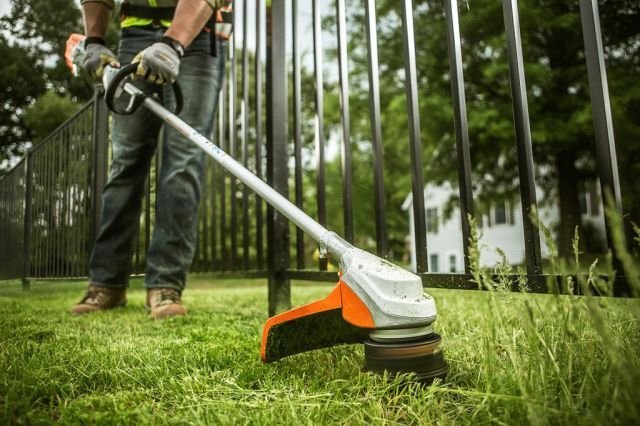
Stihl Lawn Trimmer vs. Electric Brush Cutter: A Direct Comparison
Let’s put the key decision factors side by side so you can see clearly how the Stihl lawn trimmer stacks up against the best electric alternatives across the dimensions that matter most.
Power and Cutting Performance
Stihl lawn trimmer: Undisputed leader for maximum raw power, especially in brush cutter configurations with heavy blades. Unlimited runtime is a genuine advantage for large properties or professional all-day use.
Electric brush cutter: Today’s best models (EGO 56V, Greenworks 80V, DeWalt 60V) deliver performance comparable to entry and mid-range Stihl gas models for most residential tasks. Heavy commercial work still favors gas.
Winner for most homeowners: Draw — electric models are now genuinely sufficient for the vast majority of residential scenarios.
Maintenance Requirements
Stihl lawn trimmer: Requires 2-stroke fuel mixing, carburetor maintenance, air filter service, spark plug replacement, and careful seasonal storage. Total annual maintenance time of 2–4 hours minimum for a conscientious owner.
Electric brush cutter: Requires blade or head inspection, battery storage management, and periodic cleaning. Total annual maintenance time under 30 minutes in most cases.
Winner: Electric — by a wide margin for homeowners who dislike mechanical maintenance.
Noise and Emissions
Stihl lawn trimmer: Typically operates at 90–100 dB — loud enough to require hearing protection. Produces exhaust fumes throughout operation.
Electric brush cutter: Typically operates at 75–85 dB — significantly quieter, and in most cases, no hearing protection is required for short sessions. Zero direct emissions during operation.
Winner: Electric — for neighborhood use, early morning or evening work, and health-conscious homeowners.
Upfront Cost
Stihl lawn trimmer: Residential models start around $200–$250. Mid-range self-propelled models run $350–$500. Professional brush cutters exceed $600.
Electric brush cutter: Entry-level models start under $150. Mid-range brushless models with batteries run $250–$450. Premium platforms like EGO or DeWalt with large batteries can reach $500+.
Winner: Variable — electric wins at the entry level; premium electric models are comparable to mid-range Stihl pricing.
Long-Term Running Costs
Stihl lawn trimmer: Ongoing costs include 2-stroke fuel, oil, spark plugs, air filters, line, and occasional professional service. Annual running costs of $50–$150 are typical for a regularly used residential trimmer.
Electric brush cutter: Primary ongoing costs are replacement trimmer line and eventual battery replacement (typically every 3–5 years). Annual running costs of $10–$40 for most homeowners.
Winner: Electric — significantly lower long-term operating costs.
How to Choose Between a Stihl Lawn Trimmer and an Electric Brush Cutter
Use this straightforward decision framework to identify which direction is right for you.
Choose a Stihl lawn trimmer if:
- You’re a professional landscaper or maintain multiple large properties
- Your clearing work involves heavy woody brush, dense saplings, or thick invasive growth consistently
- You need all-day runtime without any charging interruptions
- You already have a relationship with a Stihl dealer and value their service network
- You’re comfortable with regular mechanical maintenance
Choose an electric brush cutter if:
- You’re a homeowner maintaining a residential property
- Your trimming needs are primarily grass, weeds, and occasional light brush
- You value quiet operation and zero emissions
- You want minimal maintenance and grab-it-and-go convenience
- You’re building or expanding a cordless battery tool ecosystem
- You’re interested in exploring the best value on equipment — including standout deals like the Yard Force 21″ Self-Propelled RWD Walk Behind Mower at Sam’s Club, which pairs perfectly with a cordless trimmer setup for a complete battery-powered lawn care system
Getting the Most From Your Electric Brush Cutter
Whether you’ve decided on an electric brush cutter or you’re already the owner of one, these practical tips will help you maximize performance and extend the life of your investment.
Match the Right Cutting Attachment to the Job
Most electric brush cutters are compatible with both string trimmer heads and metal cutting blades. Using the right attachment for the material you’re cutting makes a significant difference in both results and tool longevity.
String head: Best for grass, weeds, and soft green growth. Fast, efficient, and low risk of blade damage from hidden rocks or debris.
Tri-arc or chisel blade: Best for woody stems, thick brush, and established invasive plants. Delivers far more cutting force than string for tough material.
Plastic blade: A middle ground option — more durable than string in rocky areas, less aggressive than metal blades. Good for mixed-material areas where hidden rocks are a concern.
Maintain Correct Cutting Angle and Posture
Brush cutters are most effective when the cutting attachment is held parallel to the ground and moved in smooth, sweeping arcs. Tilting the blade too far causes uneven cutting and increases wear on the tool and attachment.
For extended sessions, always use the provided shoulder harness rather than supporting the tool’s weight entirely with your arms. This distributes the load across your body, reduces fatigue, and improves control — especially important when using a metal cutting blade near your legs.
Manage Your Battery Runtime Strategically
For larger clearing jobs, plan your battery usage to ensure you complete the most demanding material first while your battery is at peak charge. Battery-powered tools deliver maximum torque at full charge and can feel slightly less aggressive as charge depletes — though quality brushless models manage this more smoothly than older brushed designs.
If your property requires more than a single battery’s worth of work, investing in a second battery and keeping it charged and ready eliminates downtime completely.
Store Your Battery Properly Between Sessions
Lithium-ion batteries perform best when stored in moderate temperature conditions — ideally between 50°F and 77°F. Avoid storing batteries in hot garages, uninsulated sheds, or direct sunlight, as heat accelerates degradation of the battery cells over time.
For seasonal storage, charge the battery to approximately 50–60% before setting it aside for winter. Never store a lithium-ion battery in a fully depleted state, as this can cause irreversible cell damage.
Complementing Your Trimmer Setup With the Right Lawn Mower
A great brush cutter or trimmer is most effective as part of a complete lawn care system. Trimming and edging produces the clean, defined borders that make a mowed lawn look professionally finished — but only if the mowing itself is done well.
If you’re upgrading your trimming setup, it’s worth evaluating your mowing equipment at the same time. For homeowners looking for a powerful, value-driven walk-behind mower to pair with their new electric brush cutter, the Yard Force 21″ Self-Propelled RWD Walk Behind Mower available at Sam’s Club is a compelling option. Its rear-wheel drive self-propelled system handles slopes and uneven terrain confidently, and its 21-inch deck is well matched to the typical suburban yard that benefits most from a cordless trimmer and brush cutter setup.
For a broader look at mowers, trimmers, and complete lawn care tool recommendations, visit our lawn care shop where we’ve curated the best options across every category, budget, and yard type.
Frequently Asked Questions About the Stihl Lawn Trimmer and Electric Brush Cutters
Is a Stihl lawn trimmer worth the price compared to electric alternatives? For professional use or very demanding residential brush clearing, yes — the Stihl lawn trimmer’s power, durability, and dealer support justify the premium. For typical residential trimming and light brush work, a quality electric brush cutter from EGO, Greenworks, or DeWalt delivers comparable results at lower long-term cost.
Can an electric brush cutter replace a Stihl lawn trimmer for heavy brush? For woody brush up to approximately 1 inch in diameter, a high-voltage brushless electric brush cutter (80V Greenworks or EGO 56V with blade attachment) is a legitimate alternative. For commercial-grade clearing of thick saplings or sustained all-day professional work, a Stihl gas model still holds an advantage.
How long does an electric brush cutter battery last per charge? Runtime varies by battery capacity and cutting intensity. With a large battery (7.5 Ah or above), expect 45–75 minutes of productive brush cutting. Trimming lighter material with lower speed settings can extend runtime to 90 minutes or more.
Do electric brush cutters require the same safety precautions as a Stihl lawn trimmer? Yes — when using metal blade attachments, electric brush cutters require the same protective gear as gas models: heavy-duty work boots, cut-resistant leg protection (chaps), safety glasses, and gloves. The tool’s electric power source does not reduce the danger of a spinning metal blade.
Can I use a Stihl lawn trimmer head on an electric brush cutter shaft? Trimmer head compatibility depends on the attachment threading and arbor size of your specific electric brush cutter. Many quality electric brush cutters use universal attachment systems, but Stihl-specific heads may not be directly compatible without an adapter. Always verify compatibility with your electric brush cutter’s manufacturer before purchasing aftermarket heads.
What is the best electric brush cutter for someone switching from a Stihl lawn trimmer? For homeowners making the switch from a gas Stihl lawn trimmer, the EGO BC3800 or Greenworks 80V brush cutter are the most natural transitions — both deliver the kind of confident, capable performance that gas trimmer users expect, without the maintenance overhead.
Final Verdict: Stihl Lawn Trimmer or Electric Brush Cutter — Which Wins?
The honest answer is that both categories have a legitimate place in today’s lawn care market — and the right choice genuinely depends on how you use your equipment.
The Stihl lawn trimmer remains the best choice for professional landscapers, large-property owners who need all-day runtime, and anyone dealing with consistently heavy brush-clearing demands. Its engineering quality, dealer support network, and raw cutting capability in the brush cutter configurations are genuinely difficult to match.
But for the majority of homeowners — those maintaining suburban or semi-rural properties with regular trimming needs and occasional brush clearing — the best electric brush cutters available today are a smarter, more practical, and more cost-effective choice. The gap in performance has narrowed dramatically, while the advantages in noise, emissions, maintenance, and long-term running cost have only grown.
The EGO BC3800 is our top overall recommendation for homeowners making this evaluation. It delivers the performance you need, the ecosystem compatibility that adds long-term value, and the user experience that makes lawn care feel less like a chore.
Whatever you decide, pair your trimmer or brush cutter with a quality mower, keep your blades sharp, and your lawn will show the results every single week. Visit our lawn care shop to explore our full range of recommendations and find the right equipment for your specific property today.